
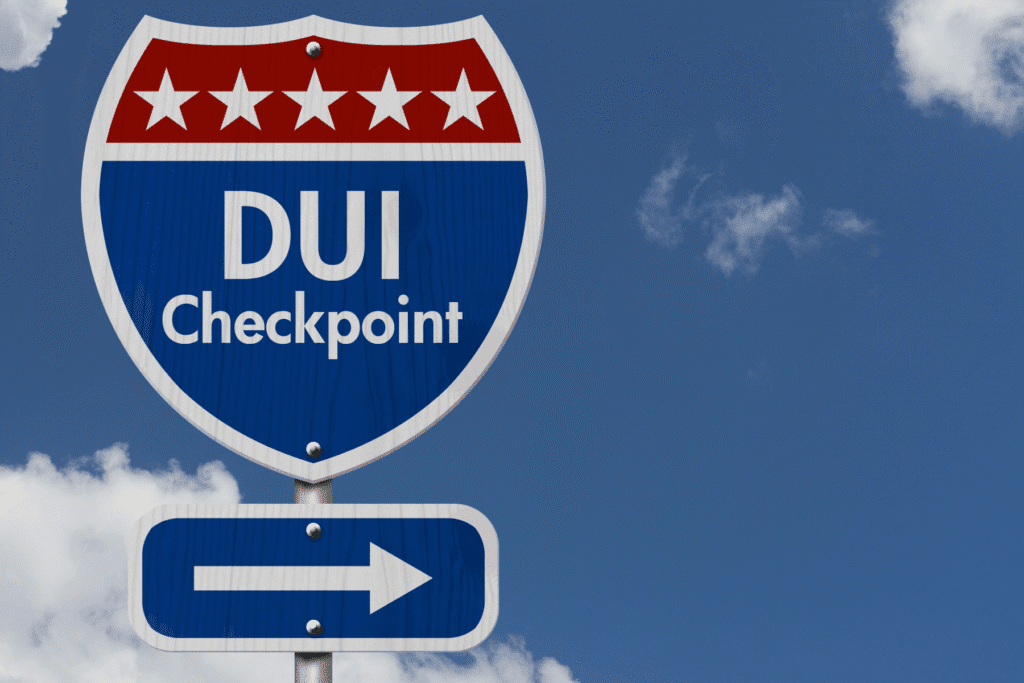
Are They Legal?
Driving under the influence (DUI) remains a major public safety concern in Arizona and throughout the United States. To combat impaired driving and prevent alcohol-related crashes, law enforcement agencies sometimes conduct DUI checkpoints—also known as sobriety checkpoints—on public roadways.
This often raises an important question: Are DUI checkpoints legal in Arizona?
The short answer is yes, but only when they are carried out under strict legal guidelines and constitutional limitations.
Legal Basis for DUI Checkpoints in Arizona
DUI checkpoints are lawful in Arizona under both federal and state law. The U.S. Supreme Court has upheld the constitutionality of sobriety checkpoints, finding that the government’s interest in preventing drunk driving outweighs the minimal inconvenience to motorists who are briefly stopped.
This federal precedent provides the foundation for sobriety checkpoint legality nationwide, including in Arizona.
However, Arizona law enforcement agencies must follow specific procedural rules for a checkpoint to be considered valid. These requirements typically include:
- Providing advance public notice of the checkpoint’s general location and time
- Clearly marking the checkpoint site with signage, lighting, and visible police presence
- Stopping vehicles according to a neutral, predetermined formula—such as every third or fifth vehicle—rather than allowing officers unfettered discretion
These safeguards are designed to prevent arbitrary enforcement and protect drivers’ constitutional rights.
State Constitutional Protections and Requirements
Some drivers mistakenly believe Arizona’s constitution prohibits sobriety checkpoints. In reality, the Arizona Supreme Court has recognized that DUI checkpoints do not automatically violate state protections against unreasonable searches and seizures.
To comply with constitutional standards, checkpoints must be conducted in a manner that minimizes intrusion and avoids discriminatory practices.
Additionally, sobriety checkpoints are often announced in advance through local news outlets or police department communications. Public notice ensures transparency and helps reinforce the deterrent effect of these operations.
What Happens at a DUI Checkpoint
When approaching a checkpoint, drivers are typically asked to provide basic documentation, including:
- A valid driver’s license
- Vehicle registration
- Proof of insurance
Officers will also watch for signs of impairment, such as:
- The odor of alcohol
- Bloodshot or watery eyes
- Slurred speech or delayed responses
If an officer develops reasonable suspicion that a driver may be impaired, they may request further investigation, including field sobriety tests or a preliminary breath test.
Under Arizona’s implied consent law, drivers who are arrested for DUI must submit to a chemical test of breath, blood, or urine. Refusal after arrest carries serious administrative penalties, including mandatory license suspension—even if the driver is not ultimately convicted.
It is important to note the distinction:
- Field sobriety tests and roadside breath tests are generally voluntary
- Drivers may decline without immediate legal penalty, though refusal may affect an officer’s decision-making during the stop
Your Rights at a DUI Checkpoint
Even at a lawful checkpoint, motorists maintain important constitutional protections.
Drivers must provide identification and required vehicle documentation, but they are not obligated to answer questions such as whether they have been drinking. The right to remain silent still applies, and drivers may politely decline to respond beyond basic legal requirements.
Drivers also have the right to refuse consent to a vehicle search. Unless officers have probable cause or the driver voluntarily agrees, law enforcement generally cannot search the vehicle at a checkpoint.
Any evidence obtained through an unlawful search may be challenged and potentially suppressed in court.
Avoiding DUI Checkpoints
Drivers may legally avoid a checkpoint by turning off or taking an alternate route before reaching it—so long as the maneuver is lawful.
However, unsafe or illegal actions such as:
- Illegal U-turns
- Crossing medians
- Reckless driving
can give officers independent justification to initiate a traffic stop.
Conclusion
DUI checkpoints are legal in Arizona when conducted in accordance with constitutional and procedural requirements. They serve as a law enforcement tool to deter impaired driving and promote roadway safety.
Motorists should understand both their obligations—such as providing identification—and their rights, including:
- The right to remain silent
- The right to refuse voluntary roadside tests
- The right to decline vehicle searches without probable cause
Being informed can help drivers navigate sobriety checkpoint encounters lawfully while protecting their legal interests.
📍 Scottsdale Office
11111 N Scottsdale Rd, Suite 225, Scottsdale, AZ 85254
📞 (480) 584-3328
📍 Lake Havasu City Office
2800 Sweetwater Ave, Suite A104, Lake Havasu City, AZ 86406
📞 (928) 854-8181
This blog post is for informational purposes only and does not constitute legal advice. Reading this content does not create an attorney-client relationship. For legal guidance specific to your situation, please contact a licensed attorney at Rideout Law Group.